Arbitration: DRVM LLC
This page documents the arbitration phase of my case against DRVM LLC and the corporate structure behind it.
This is where the case started as a “$600 wage dispute” and quickly turned into a whistleblower-level fraud story involving dissolved shells, hidden payroll, and a global pharmaceutical company.
This page covers:
• My first demand and pre-arbitration steps
• How JAMS arbitration was set up and amended
• The collision between GRSM and Fisher Phillips
• DRVM’s mid-case “reactivation”
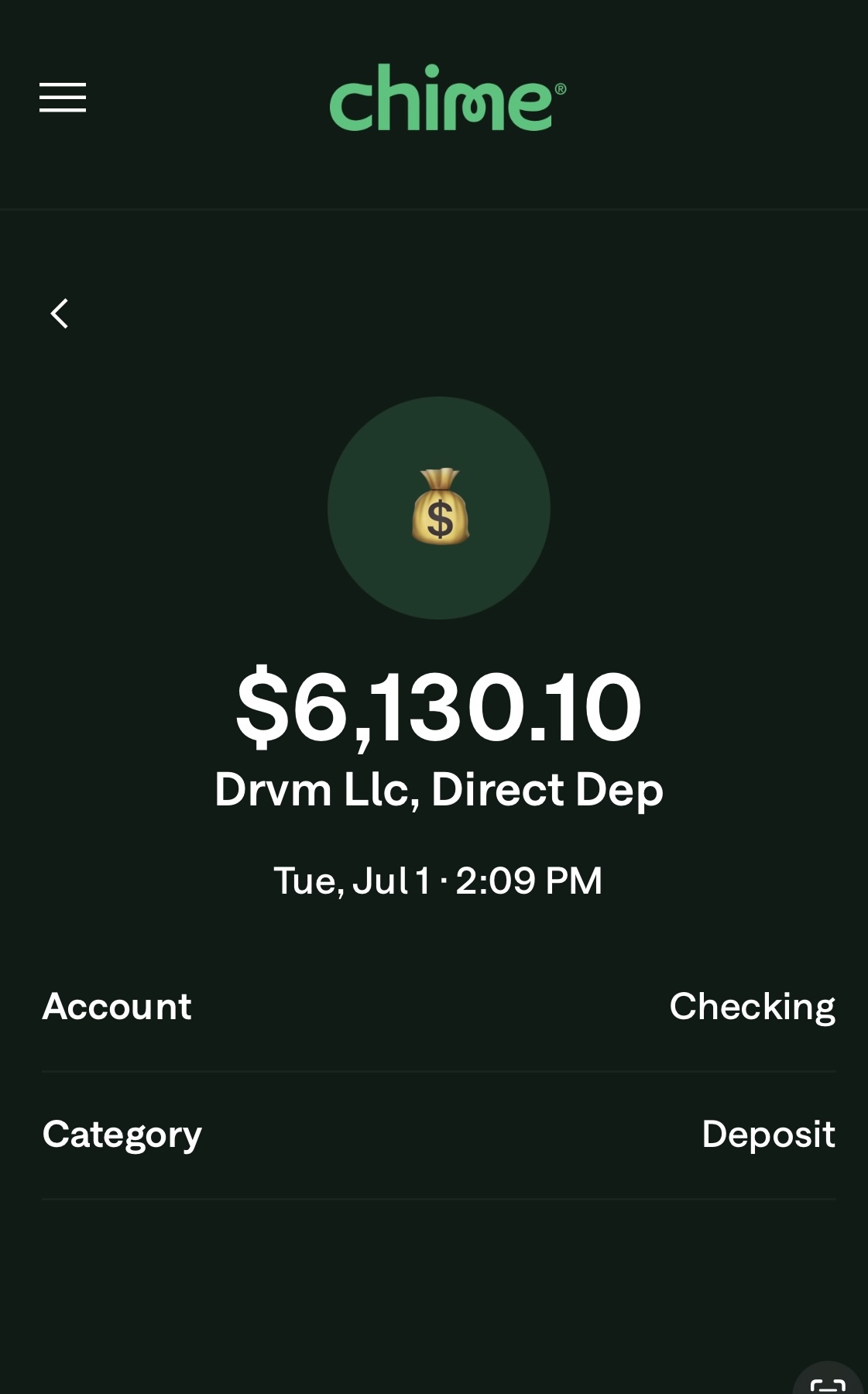
• The secret $6,130.10 deposit
• The AI arbitrator dispute and the broken strike list
• The point where arbitration broke down and I moved to federal court under 9 U.S.C. § 5
For everything that happened after arbitration spilled into federal court (federal petition, motions, defaults, Deepak, docket manipulation, and the November 24, 2025 ruling), see the Petition to Compel Arbitration page.
⸻
1. How It Started: My First Demand & GRSM Appears (February 2025)
This case started the way a lot of cases do: with a paycheck that didn’t add up.
On February 11, 2025, I sent my first formal demand:
• To DRVM LLC
• Directly to CEO Maged “Mike” Boutros
• To his work email, his physical work address, and DRVM’s corporate email
I wasn’t trying to go nuclear. I wanted my wages and an explanation for why my employer on paper was a dissolved Oregon LLC.
Within days, DRVM didn’t respond. Instead, I heard from Gordon Rees Scully Mansukhani (GRSM), a large defense firm. They told me that from that point on, all communications needed to go through them as counsel for DRVM.
That’s when I knew this wasn’t just “some payroll error.”
Key Documents
• My First Demand to DRVM – Feb 11, 2025
My first letter demanding resolution, sent directly to CEO Maged “Mike” Boutros.
• GRSM Notice of Appearance – Feb 14, 2025
GRSM appears for DRVM LLC and orders all communication to go through them.
• Email Thread with GRSM – Feb 18 – Mar 3, 2025
Emails from my original demand service through the lead-up to my amended arbitration demand.
⸻
2. Taking It to JAMS: Filing the Core Arbitration Demand
When it was clear they weren’t going to fix this informally, I moved the case into arbitration with JAMS, which is what the arbitration agreement said we had to use.
I:
• Filed an initial demand through the JAMS portal
• Then followed with a 64-page Second Amended Arbitration Demand and over 100 exhibits
That 64-page amendment became the core of the arbitration. It didn’t just say “you underpaid me.” It laid out:
• The dissolved status of DRVM
• The structure behind “Direct Demo”
• The link between the shells and Sanofi / Chattem / Quten
• How this wasn’t a one-off mistake, but a model
Key Document
• Second Amended Arbitration Demand – Feb 26, 2025
My 64-page core arbitration demand, with exhibits, outlining the structure and valuation.
⸻
3. Naming the Real Structure & GRSM Tries to Shrink the Case
Once I started connecting dots, I realized DRVM was just the front.
In my amended filings I named:
• DRVM LLC – the dissolved Oregon LLC on my W-2/paystub
• AMJ Services LLC – the successor/front company continuing the same business model
• Maged “Mike” Boutros – CEO of DRVM
• Quten Research Institute LLC (Qunol) – the product brand I was actually demoing for
• Chattem Inc. – Sanofi subsidiary (IcyHot, Allegra, etc.)
• Sanofi-Aventis U.S. LLC – the multi-billion-dollar pharmaceutical company sitting at the top
• Ashraf “Peter” Boutros, Deepak Chopra, Marie-Laurie Amiard-Boutros
I had to serve 8–10 respondents to make sure no one could later claim, “We were never notified, we’re unrelated.”
At first, GRSM was listed as counsel for multiple parties on the JAMS service list: DRVM, AMJ Services, and Maged Boutros. After a month of silence, they suddenly tried to walk that back.
On March 20, 2025, GRSM sent a letter saying they would represent only DRVM LLC, not AMJ Services or Maged Boutros—despite already showing up for them.
That’s when I realized: the game was going to be representation musical chairs.
Key Documents
• GRSM – Clarification of Representation – Mar 20, 2025
GRSM announces it will only represent DRVM, backing away from AMJ Services and Maged Boutros.
• My Letter to JAMS About GRSM – Mar 20, 2025
I tell JAMS in writing that GRSM is now trying to narrow its role after being listed for multiple parties.
• Original JAMS Service List
Shows GRSM on record for AMJ Services, DRVM, and Maged “Mike” Boutros.
• My Follow-Up Emails to JAMS – Mar 13 – Apr 12, 2025
Emails confirming service on eight parties and referencing whistleblower filings underway.
⸻
4. The Valuation: Why I Called It a $10–$15 Billion Case
Around early April, during the “Hands Off” movement, I hit a turning point.
On April 6, 2025, I sent what I called the Global Impact Settlement Letter. In that letter, I valued the case at $10 billion and tied it to something bigger:
• W-2 workers paid under dissolved or sham entities
• The tax implications of that structure
• The fact that a global pharmaceutical company sat on top of the entire scheme
Here’s what matters:
At that point, it wasn’t about my personal damages.
I wasn’t expecting a personal check for billions. That’s not realistic, and I knew that.
The valuation had to match the full scale of the structure, and it had to line up with what I was reporting to federal authorities.
If I’m telling the IRS, the SEC, and the Department of Labor that this structure represents a multi-billion-dollar exposure, I can’t go into arbitration pretending it’s just a few thousand dollars in unpaid wages. The valuation was:
• The valuation of the full scale over the last decade, not a fantasy payday
• A way of forcing the legal system and the companies to confront the true scope of what was going on
• The spark that set everything else in motion: the law firm switches, the reactivation, the whistleblower confirmations, the secret deposit, and eventually the federal petition
When they ignored the settlement letter and kept playing games, I followed through:
• I filed a Third Valuation Amendment (April 7) attaching the settlement letter as Exhibit B
• Then a Fourth Amendment Demand (April 8), increasing the valuation to $15 billion based on ongoing concealment
That number — $15 billion — is not me trying to get rich. It’s a mirror held up to the full structure. And once I put that number on the record, everything started to crack open.
Key Documents
• Exhibit B – Global Impact Settlement Letter – Apr 7, 2025
The letter explaining the structure and initially valuing the fraudulent scheme at $10B.
• Third Valuation Amendment – Apr 7, 2025
Formally incorporates that letter into the arbitration record.
• Fourth Amendment Demand – Apr 8, 2025
Increases the valuation to $15B after no resolution and continued concealment.
⸻
5. Two Law Firms, One Dissolved Company (GRSM & Fisher Phillips)
This is where the arbitration record stops looking like a normal wage case.
On April 14, 2025:
• GRSM asks JAMS for two extra weeks to “determine representation”
• Fisher Phillips, another major defense firm, suddenly appears for DRVM LLC—right after my global settlement letter and valuation amendment
JAMS asks a basic clarifying question:
Are you co-counsel with GRSM, or taking over?
Fisher Phillips replies they are “unaware” of GRSM being involved, even though GRSM is literally on the JAMS record for DRVM.
Over the next weeks:
• JAMS has to remind the firms multiple times that more than one law firm is claiming to represent the same party
• No one gives a straight answer
• On April 28, GRSM simply withdraws, without explaining who covers the other parties they previously appeared for
This is exactly what it looks like when the real decision-makers are off-record.
Key Documents
• GRSM Request for 2 Weeks – Apr 14, 2025
GRSM asks for more time to sort its representation while sitting on my amended demand.
• My Response to GRSM (Move Forward on Arbitrator) – Apr 14, 2025
I tell JAMS I want to proceed with arbitrator appointment anyway.
• Fisher Phillips Notice of Appearance (DRVM LLC) – Apr 14, 2025
Fisher Phillips appears for DRVM, right after my settlement letter and valuation jump.
• My Responses to Fisher Phillips – Apr 14–15, 2025
Push back on random JAMS emails and dashboard issues.
• Fisher Phillips / JAMS Email Thread – Apr 14 – May 30, 2025
Shows long stretches of silence and stalling as we try to get to commencement.
• GRSM Official Withdrawal – Apr 28, 2025
GRSM exits with no clarification about who takes over for the other named parties.
⸻
6. DRVM Reactivates Mid-Case & My IRS Whistleblower Confirmation
Then came two huge moments, both in late April:
DRVM’s Sudden Reactivation
On April 25, 2025, DRVM LLC — the dissolved entity at the center of my paystubs — reactivated its Oregon business license right in the middle of the arbitration.
The entire case is about them operating while dissolved. Suddenly “fixing” that after being called out is not a coincidence. It goes straight to intent, which is exactly what investigators look at.
IRS Whistleblower Office Confirmation
Three days later, on April 28, 2025, I received notice from the IRS Whistleblower Office:
• They had opened three separate whistleblower files for:
• Sanofi
• Chattem Inc.
• Quten Research Institute
I can’t comment on what the IRS is doing internally, but I can say this: they do not hand out claim numbers lightly. That alone tells you the evidence wasn’t “nonsense” to them.
Key Documents
• Exhibit 108 – DRVM Business Reactivation – Apr 25, 2025
State record showing DRVM reactivating after I exposed its dissolved status.
• IRS Whistleblower Office Notice – Apr 28, 2025
Confirms assignment of three IRS whistleblower claim numbers.
⸻
7. Fighting Through Fees: Waiver & Rule 6(e) Motion
To even get an arbitrator, you have to get past money.
JAMS sent out a Notice of Intent and invoices to everyone. The arbitration agreement said I had to pay filing fees up to what it would cost to file in court. I filed for a fee waiver.
• The waiver was granted, meaning Fisher Phillips / DRVM had to cover the main cost
• That alone is rare in a case this large
When the invoice still wasn’t paid, I used the rules they wrote:
• On June 14, 2025, I filed a Motion to Appoint an Arbitrator under JAMS Rule 6(e), which lets JAMS move forward when one side is obstructing by not paying.
Key Documents
• Notice of Intent & Fee Waiver – June 3, 2025
Shows that JAMS accepted my fee waiver and shifted the cost burden to respondents.
• Claimant’s Motion to Appoint Arbitrator (Rule 6(e)) – June 14, 2025
Asks JAMS to appoint an arbitrator despite respondents’ nonpayment.
• My Administrative Email Thread – May 13 – May 30, 2025
Shows me pushing to keep the case moving while they stayed silent.
⸻
8. AI Arbitrator, Their Objection, and the Secret $6,130.10 Deposit
By this point, AI wasn’t a side note — it was how I was surviving this case.
I was:
• Using AI to research corporate structures, case law, and strategy
• Going up against a $120B+ pharma company and top law firms who all had their own AI tools
• Litigating what I honestly believe is one of the first AI-assisted whistleblower cases of this scale
So I asked for an arbitrator who understood that world.
I proposed:
• Dr. Ryan Abbott, and
• Other experts like Daniel Garrie
They literally helped write JAMS’s own AI arbitration rules.
Fisher Phillips responded by:
• Objecting,
• Calling this an “uncomplicated Oregon wage dispute,” and
• Acting like AI and emerging technology had nothing to do with a case involving a global pharma company, modern shell structuring, and a federal whistleblower.
JAMS then acknowledged something important: if we couldn’t agree on an arbitrator, I had the right under the agreement and federal law to go to court and ask a judge to appoint one.
So I did what any reasonable person would do who’s being stalled:
• I gave them 48 hours (to July 1, 2025) to agree to a strike-and-rank list that included AI / emerging tech expertise.
Then the wildest thing in the arbitration phase happened.
The Secret Deposit
A few hours after I sent the 48-hour deadline notice, on July 1, 2025, DRVM suddenly sent:
• $6,130.10
• To a bank account I hadn’t used in over six months
• With no paystub, no settlement agreement, no court order, and no explanation
The timing is obvious:
• Right when I’m about to go to federal court
• Right after I set a hard deadline
• Right as they’re trying to reframe this as “just wages”
They wanted that money to quietly moot the case.
I refused. I made it Exhibit 110 and treated it as what it was: a secret, off-record attempt to derail one of the largest payroll fraud cases in the country on a technicality.
Key Documents
• Fisher Phillips AI Arbitrator Objection – June 27, 2025
Claims this is just a basic wage dispute and AI isn’t relevant.
• My Response to AI Arbitrator Objection (Exhibit 21)
Explains why AI, whistleblower law, and emerging tech are central to this case.
• Fisher Phillips / JAMS Threads Around Commencement & Arbitrator Selection – June 16 – July 1, 2025
Shows the build-up to the 48-hour deadline and the payment timing.
• Undisclosed Secret Deposit – July 1, 2025 (Exhibit 110)
Screenshot of the $6,130.10 deposit with no paperwork.
⸻
- DRVM Agreement on AI and Emerging Tech Qualifications
During the 48-hour deadline to respond to the arbitrator strike list, Fisher Phillips filed a notice approving the list, including the AI and Emerging Technology qualifications, thereby affirmatively agreeing to proceed under those criteria.
10. DRVM’s Answer & the Strike List That Broke Arbitration
After months of silence and avoidance, Fisher Phillips finally filed DRVM’s Answer on July 16, 2025.
They:
• Denied almost every allegation
• Denied that this was a broader fraud structure
• Ignored the July 1 deposit entirely
• Filed the Answer solely on behalf of DRVM LLC, which had been dissolved during key events
I followed up with JAMS to point out:
• The missing deposit
• The standing problems with a dissolved entity
• The need for an arbitrator who understood what this case actually was
Then on July 25, 2025, JAMS sent out the Strike-and-Rank Arbitrator List.
It had:
• Retired judges
• Employment and general civil practitioners
• Not a single person with:
• AI or emerging technology experience
• Healthcare/pharmaceutical fraud background
• Whistleblower / False Claims Act-style fraud experience
JAMS has those arbitrators. They just didn’t put them on my list.
This is what I mean when I say the list was built to work against me.
• We had already agreed (on record) that arbitrators needed AI / emerging tech background
• They had experts who literally co-wrote the AI rules
• And somehow, not one of them appeared on the list for a case tied to a global pharma company now under federal whistleblower scrutiny
That was the line for me.
I gave 48 hours to fix the list. Not seven days. Not endless delays. Forty-eight hours. If they didn’t, I was going to federal court.
Key Documents
• DRVM’s Answer to the Demand – July 16, 2025
Denies all claims and omits the secret $6,130.10 payment.
• My Arbitrator Selection Follow-Up – July 18–22, 2025
Calls out the omissions and emphasizes the need for proper arbitrator qualifications.
• JAMS Strike Arbitrator List (Exhibit 28) – July 25, 2025
Arbitrator list with no AI, whistleblower, or pharma-fraud experience.
• My Objection to the Strike List (48-Hour Deadline) – July 29, 2025
Formally rejects the list as non-compliant and gives 48 hours to fix it.
• Email Thread – Objection & 48-Hour Deadline – July 29, 2025
Shows JAMS trying to use a standard 7-day window while ignoring the agreed criteria.
⸻
When Arbitration Broke: Filing the Federal Petition (July 31, 2025)
When:
• The arbitrator list ignored everything we agreed to,
• They objected to AI / tech-qualified arbitrators,
• They sent a secret deposit to an old account with no paperwork,
• Two major law firms played tag team over a dissolved LLC, and
• Nobody would admit who really stood behind DRVM, and none of the real parties appeared
I used the one escape hatch that still existed:
On July 31, 2025, I filed a Petition in federal court under 9 U.S.C. § 5 asking the judge to:
- Order the appointment of a qualified arbitrator
- Compel all the parties that are responsible into arbitration
- Take the entire arbitration record — emails, withdrawals, invoices, exhibits, IRS notices, shell filings, and the deposit — and put it on a public docket
The case was filed as:
Hollingsworth v. Sanofi-Aventis U.S. LLC et al.
Case No. 3:25-cv-01342-AB
U.S. District Court, District of Oregon
It was assigned to Judge Amy Baggio, a former federal public defender and Multnomah County judge. Whatever happens with her rulings, the important part is this:
The arbitration chapter stopped being hidden.
The record went public.
And the upstream companies could no longer hide behind DRVM inside a private forum.
From here, the story continues on the Petition to Compel Arbitration page:
• Their federal response attacking my whistleblower status
• My notices of retaliation and false claims
• The battles over service, defaults, docket “corrections,” and Deepak’s motion
• And finally, the November 24, 2025 ruling:
DRVM alone goes in alone. Everyone else is released from arbitration. This is JUST A WAGE CLAIM. They succeeded.
Although DRVM and I are now proceeding with strike-and-ranking from the same arbitrator list, the broader objective has already been achieved: the upstream actors have been brought into the open, the dispute is now public, and the corporate structure can no longer remain obscured. Arbitration will move forward on the narrow wage claim, while the larger accountability effort proceeds in federal court for the true accountability. There is no real judgment that can happen with a shell company.
I’ll share which arbitrator is appointed and continue documenting this process as it unfolds.
——————————————————————————————————————————
Arbitrator Assignment - Judge Dean S. Lum(ret)
Preliminary Conference & Discovery Commencement
Executive Summary
The arbitration preliminary conference was held with the Judge Dean S. Lum, Bobbi Edwards of Fisher Phillips LLP, and myself.
This conference formally initiated the arbitration proceeding and established the procedural framework moving forward.
1. Case Framing on the Record
At the outset, the Arbitrator asked each side to briefly describe the dispute.
I stated that the matter is a narrow wage claim and related penalties, consistent with the court’s prior order.
Respondents characterized the matter more broadly, referencing additional claims and significantly larger figures. The Arbitrator did not engage in merits discussion and moved the conference forward to scheduling and procedure.
2. Scheduling & Hearing Date
The conference focused primarily on case management:
• Discovery limits
• Depositions
• Dispositive motions
• Hearing scheduling
Although I indicated availability for a hearing within just a few months, the final hearing was scheduled approximately one year out.
The matter is now formally set on calendar. December 8, 2026
3. Dispositive Motions & Discovery
Respondents indicated they believe the matter could potentially be resolved without full discovery.
The Arbitrator clarified that while dispositive motions are permitted in arbitration, discovery would proceed. The Scheduling Order authorizes structured discovery before any resolution.
Discovery is now open.
4. Discovery Parameters Ordered
The Arbitrator ordered:
• 10 interrogatories per side
• 10 requests for production per side
• 3 fact witness depositions per side
• Initial disclosures within 30 days
• Discovery responses and production within 30 days
On January 27, 2026 — the same day the Scheduling Order was entered, I served:
• Initial disclosures
• 10 interrogatories
• 10 requests for production
All discovery requests are narrowly tailored to payroll records and wage calculations.
Full discovery requests are attached.
5. Arbitration Agreement Clarification
During discussion of scope, the Arbitrator inquired about the location of the arbitration agreement within the employment records.
Respondents indicated they would need to verify.
I confirmed that the agreement is available in the employee portal and that the relevant court order addressing arbitration scope is part of the record.
The Arbitrator acknowledged the clarification.
6. Payroll Provider Transition & Preservation Notice
Shortly after discovery was served, I was notified that Respondents were transitioning payroll providers from ADP to Paycom.
Because payroll records are central to this arbitration, I immediately sent a written preservation notice to Fisher Phillips requesting confirmation that all ADP payroll data and related records would be fully preserved.
No written response was provided.
During a separate meet-and-confer call in federal court, I raised the preservation letter and was verbally told that documents had been preserved since the beginning of the matter. No written confirmation followed.
The Scheduling Order now requires formal production within 30 days. Compliance with preservation and production obligations will become clear as discovery responses are served.
Current Status
• Arbitration is active.
• Discovery is open.
• Hearing is scheduled.
• Initial disclosures and written discovery have been served.
• Respondents’ responses are due within 30 days.
THE ARBITRATOR SCHEDULING ORDER
All referenced documents are attached for review, including:
• The Arbitrator’s Scheduling Order (January 27, 2026)
• Initial Disclosures
• Interrogatories
• Requests for Production
• Preservation Letter
—————————————-—————————————————————————————
FISHER PHILLIPS & DRVM DISCOVERY RESPONSES
In their discovery responses, Fisher Phillips asserts sweeping objections to nearly every request—claiming vagueness, irrelevance, privilege, third-party control, and even that core information is equally available—while providing little to no substantive information beyond documents already in Claimant’s possession. At the same time, they disclaim possession or control over key records related to payroll, decision-making, and communications, despite those being central to the claims and within the scope of discovery. This approach goes beyond routine objections; it effectively blocks access to the very information needed to evaluate the case while maintaining positions that depend on that same information. In practice, it creates a one-sided record—where Respondent relies on documents and conclusions, but refuses to produce the underlying materials or identify the individuals and processes involved—undermining the purpose of discovery as a fair exchange of relevant information.
——————————————————————————————————————————-
THE MEET AND CONFER DISCOVERY BATTLE
During both the meet-and-confer and the conference with the arbitrator, Respondent repeatedly characterized the case as “outrageous,” attempting to inflate the claims into something far beyond what is actually at issue, including suggesting multi-billion-dollar exposure despite the federal court already narrowing arbitration to specific claims. Claiming that they are not confirming or denying anything. At the same time, they argued that all issues should be resolved in arbitration, misrepresenting the scope of the Court’s prior order and asserting that no meaningful discovery should proceed, pushing instead for immediate summary judgment. Throughout the discussion, the arbitrator was required to repeatedly redirect the conversation back to procedure and scope, ultimately confirming that limited discovery would proceed, including depositions and written discovery. The contrast between Respondent’s position and the arbitrator’s rulings reflects a consistent attempt to expand arguments while simultaneously avoiding the structured process required to resolve them.
;In the meet-and-confer communications, Respondent repeatedly pushed out timelines for supplementation—first indicating production would take approximately 3–4 weeks due to a key manager being unavailable, then later shifting to “next week,” and ultimately continuing to delay without providing firm commitments or substantive responses.
The first of many difficult conversations where the tone shifted from discussion to confrontation, and I was expected to remain composed while being repeatedly challenged and talked down to.
——————————————————————————————————————————
THE MOTION TO COMPEL AND FOR SANCTIONS
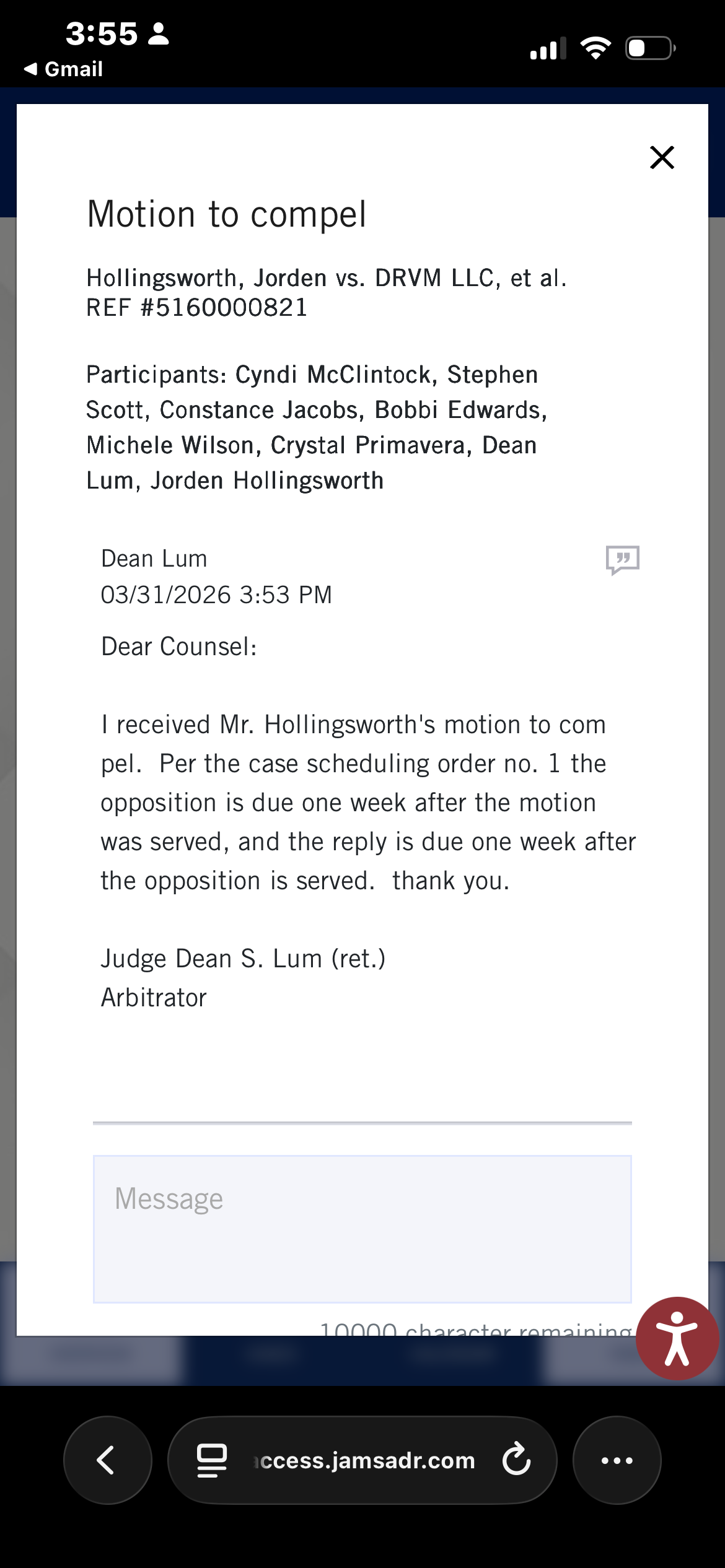
In order to obtain basic discovery, I was required to file a Motion to Compel after completing the required meet-and-confer process and giving Respondent multiple opportunities to supplement their responses. The motion outlines how Respondent failed to provide substantive answers, refused to identify key decision-makers, would not confirm whether additional documents exist, and relied on broad objections and third-party claims to avoid production. Exhibit A contains Respondent’s discovery responses, which are largely comprised of boilerplate objections and limited answers; Exhibit B includes the meet-and-confer correspondence documenting the ongoing efforts to resolve these issues without intervention; Exhibit C reflects Respondent’s supplemental production, which consisted only of documents already in my possession, including pay records; and Exhibit D is the preservation notice issued to ensure payroll data and related materials were not altered or destroyed during the discovery process. As set forth in the motion, despite certifying a “diligent search,” Respondent produced no meaningful internal documents, communications, or records, requiring arbitrator involvement to compel compliance and allow the case to proceed on a complete and fair record.
——————————————————————————————————————————
THE ARBITRATOR RESPONSE
At the same time, in federal court, Fisher Phillips takes the position that everything can be handled in arbitration, that arbitration provides full relief, that all claims belong there, and that additional parties can be brought in as needed. However, what is actually occurring in arbitration tells a different story: Respondent is resisting discovery, refusing to identify key individuals, limiting the scope of participation, and opposing efforts to bring in the very parties they claim can be included. This disconnect highlights the practical reality of what arbitration is being used for in this case, versus how it is being represented to the Court.
——————————————————————————————————————————
In their opposition, Fisher Phillips claims that my Motion to Compel is improper and brought in bad faith, arguing that it is not a legitimate effort to obtain discovery in this arbitration but part of a broader effort to advance claims in other forums. They describe the motion as “premature” and a “tactic” intended to increase costs and extract information unrelated to the narrow wage dispute. They also portray my conduct throughout the case as part of a “coordinated campaign,” suggesting that I am using arbitration to pursue wider theories involving other entities rather than to resolve the specific wage issue. Based on that framing, they argue that sanctions are unwarranted, sanctions only warranted against me, and that my motion should be denied in its entirety.
What Fisher Phillips opposition reveals is not just a routine discovery dispute, but a fundamental breakdown in how this arbitration is functioning. While asserting that arbitration provides complete relief, Respondent simultaneously takes the position that key facts do not need to be disclosed, that core discovery remains ongoing without a clear endpoint, and that even basic information, such as who made critical payment decisions, is either unnecessary or protected. At the same time, Respondent reframes the dispute as purely legal and attempts to shift focus away from the absence of factual development. The result is a record where the forum being relied upon as sufficient to resolve the case is, in practice, operating without full transparency, without confirmed completeness, and without access to the underlying facts needed to evaluate the claims.
—————————————-—————————————————————————————
April 12, 2026 – Jorden’s Reply Filed on Motion to Compel
On April 12, 2026, I filed my Reply in Support of Motion to Compel in JAMS Arbitration No. 5160000821.
The Reply explains that DRVM failed to provide basic discovery required in this case. Despite certifying a “diligent search,” DRVM did not identify key decision-makers, did not produce any internal documents, and relied primarily on materials that originated from me. It also raised new factual assertions—such as the basis for a July 1, 2025 payment, without having disclosed those facts in its discovery responses.
The motion is narrowly focused on the wage dispute in arbitration and seeks only the information necessary to evaluate DRVM’s position, including who authorized payment decisions and how those payments were calculated.
The Reply does not engage with the personal attacks and characterizations raised in DRVM’s Opposition. Arbitration is not the forum for those arguments. The issue here is whether DRVM complied with its discovery obligations.
The issue is now fully briefed and submitted. The arbitrator will decide whether DRVM must provide complete discovery responses and produce the information it has withheld.