DOL Update: Judge Refuses to Entertain Attempt to Narrow Whistleblower Case by Informal Letter
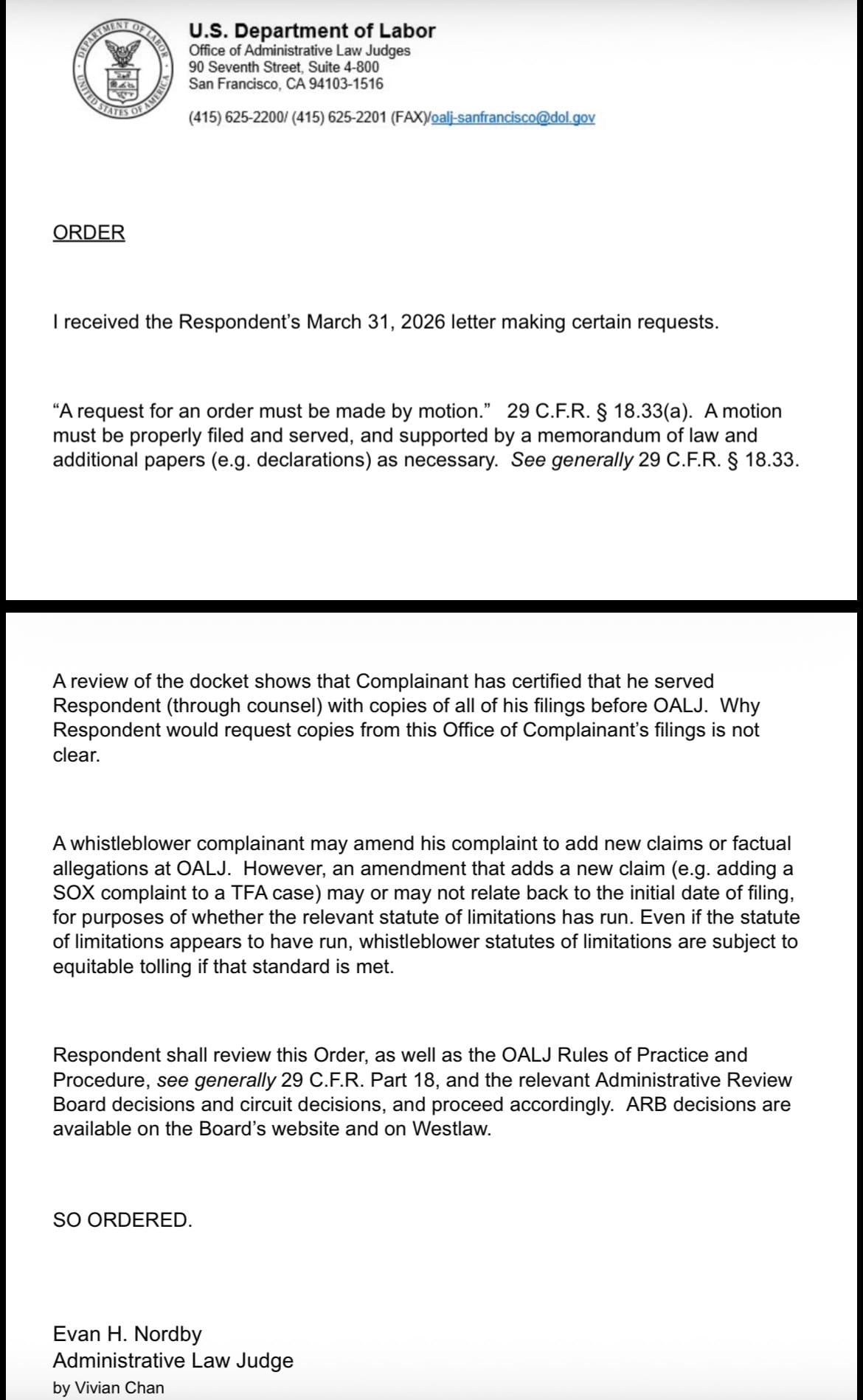
This order was issued on April 8, 2026 and is included here for clarity as the case continues to move forward.
On April 8, 2026, the Administrative Law Judge issued an order responding to a March 31 letter submitted by Respondent DRVM LLC through its counsel, Fisher Phillips LLP.
In that letter, Fisher Phillips asked the Court to step in, clarify the claims, and address the scope of the case. The Judge made clear that requests like this must be made through a formal motion under 29 C.F.R. § 18.33(a), not through an informal letter.
Because they did not follow the required process, the Court did not consider or grant the relief requested.
(If you’d like to review the March 31 filing itself, it is available in the post “DOL: Amended Complaint Served — and What Happened Next” and on the SOX/TFA Retaliation page.)
For readers unfamiliar with legal procedure, this is significant. Courts do not make decisions based on informal requests. If a party wants to limit a case or challenge its scope, they must do so through proper filings, supported by legal arguments. Without that, the Court simply does not act.
The Court also confirmed that, in whistleblower cases, a complaint may be amended to include additional facts and legal claims, including claims under the Sarbanes-Oxley Act (SOX). The Judge noted that questions about timing, such as whether claims were raised within required deadlines, can be addressed later in the case if necessary.
The Court further noted that the Amended Complaint in this matter has been properly served on the parties through counsel.
What this means in plain terms:
- The Court did not act on Respondent’s attempt to limit or narrow the case at this stage
- The amended complaint remains in place, including the full scope of claims asserted
- The case will proceed under the Court’s rules, with any challenges required to be made through proper motions
The case moves into the next phase, where both sides are required to exchange information and documents relevant to the claims under the Court’s supervision.
This case also now proceeds in a forum specifically structured for whistleblower claims, with Court oversight and formal procedures governing how issues are raised and decided.